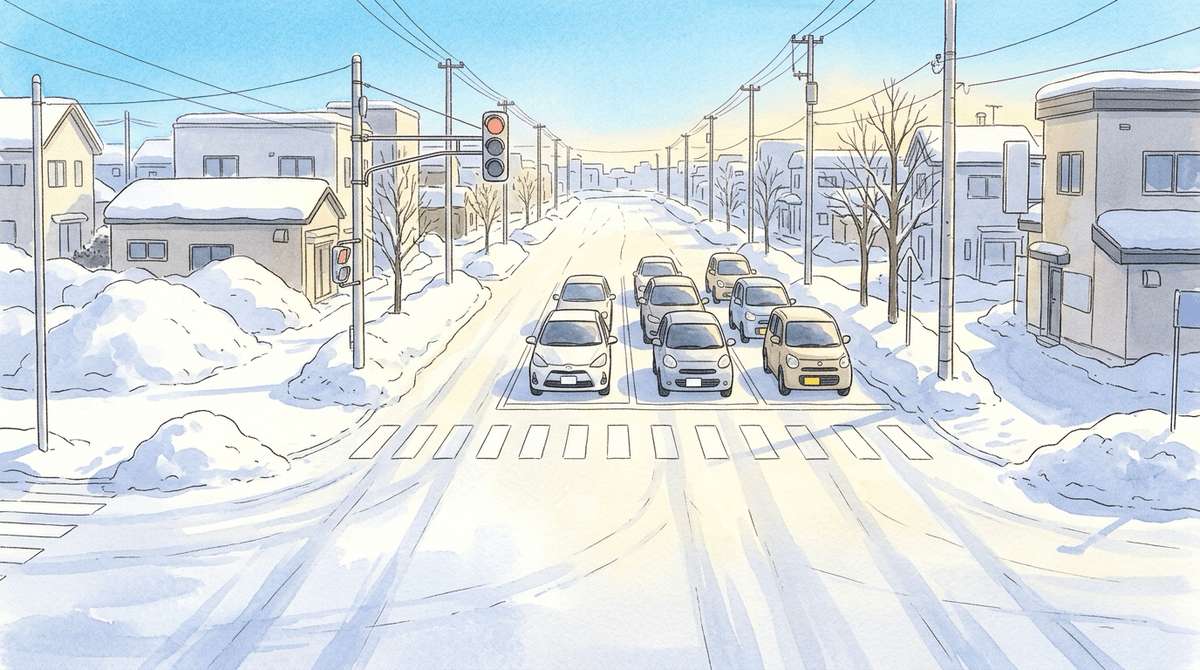
Can you sleep at a roadside station?
Can You Sleep in Your Car at a Hokkaido Michi-no-Eki? The Rules, and Why Winter Changes the Answer
You have been driving all afternoon, it is already dark, and the next town with a hotel is an hour away. The lights of a michi-no-eki (道の駅, a roadside station) come up on the left: free parking, toilets that are open all night, nobody around. Can you just sleep here?
The short answer: a nap, yes. A planned overnight stay, no. The people who run Hokkaido's roadside stations say so in writing. And from late autumn to early spring, the bigger question is not whether you are allowed to sleep in the car, but whether it is safe. This guide covers both.
The answer at a glance
| What you want to do | OK? | Why |
|---|---|---|
| Pull in and nap because you are tired | Yes | That is what the stations are for |
| Plan a night here instead of a hotel | No | Stays are asked to be avoided |
| Cook or barbecue | No | No fire of any kind |
| Charge your phone from an outlet | No | Building power is off-limits |
| Sleep in the car on purpose | Yes, elsewhere | Use an RV Park |
What the official rule says
Hokkaido's roadside stations are coordinated by the Hokkaido Michi-no-Eki liaison council, which publishes a manners page on its official site. The paragraph on overnight use, in our translation:
"Michi-no-eki are rest facilities, so we ask that you refrain from using the car parks and other public spaces for the purpose of staying overnight. Of course, michi-no-eki are rest facilities that drivers and everyone else can use free of charge, 24 hours a day, to prevent traffic accidents, so taking a nap at the facility is fine."
The line is drawn by purpose, not by the clock. Stopping because you are too tired to drive safely, sleeping, and then driving on is exactly what a roadside station is for. Choosing a roadside station as your accommodation for the night is what they ask you not to do.
The rule sets no number of hours. A useful test: if you are unrolling a stove, putting out chairs or staying a second night, you are no longer napping.
Why are the toilets open at 3 am when the shop closed at five? Because the national road bureau requires it. To be registered as a michi-no-eki, a site must offer parking with enough space, clean toilets and a baby-care corner, all free and usable 24 hours a day. Shops, restaurants and information desks keep their own hours, which differ from station to station. Hokkaido has more than 120 registered roadside stations.
Six things not to do at a roadside station at night
The same manners page lists what causes trouble. Every one of them matters more after dark:
- Don't use the power outlets. Charging phones or laptops from the building's sockets is not allowed.
- No fire. Campfires, barbecues and cooking of any kind are banned. Cigarette ends go in your car, not on the ground.
- The washroom is not a kitchen. No washing dishes, clothes or pets in the sinks.
- Follow each station's rubbish rules. If a station cannot take something, take it with you.
- Leave the supplies. Toilet paper and air fresheners stay in the toilets.
- Turn the engine off. The page asks drivers not to idle. In winter that request runs straight into keeping warm, which is the next section.
Where you can sleep in your car: RV Parks
If sleeping in the vehicle is the plan, look for an RV Park (RVパーク). These are car-sleeping sites certified by the Japan Recreational Vehicle Association. To be certified, a site must offer:
- a roomy parking space (4 m × 7 m or larger recommended)
- a toilet available 24 hours
- a 100 V power supply
- a bath or hot spring within about 15 minutes by car
- rubbish disposal
- flexible check-in and check-out
- stays of more than one night
RV Parks sit at hot springs, inns, leisure facilities and, in some cases, at roadside stations themselves. Two things to know: an RV Park is a place to sleep in your car, not a campsite, so camping-style setups are not allowed; and some sites are temporarily closed, so the association asks you to phone ahead. Fees and booking rules are set by each site. The association's site (Japanese, linked below) lists certified RV Parks.
Ordinary auto-campsites are the other option. In winter, check that the one you want is actually open before you drive there.
Winter: the rule is the easy part
From late autumn, "am I allowed?" matters less than "is it safe?". Japan's motoring organisation, JAF, has tested both ways a winter night in a car can go wrong.
Engine running, exhaust buried in snow
In February 2015 in Asahikawa, JAF buried the exhaust of two identical cars in snow and ran the engines with the air on fresh-air intake. In the car where nobody touched the snow, carbon monoxide inside reached 400 ppm, the short-term exposure limit, after 16 minutes, and the meter's maximum of 1,000 ppm six minutes later. Opening a window about 5 cm only slowed it down: CO reached 400 ppm after about 40 minutes and quickly passed 800 ppm. In the car where the snow around the exhaust was cleared, almost no CO was detected.
JAF also found exhaust pooling under the car and being drawn into the cabin, and warns that it can get in through gaps in the body even with the air on recirculation. Wind, the surroundings and the air-conditioning settings all change the result, so a setup that stayed safe in the test can still be dangerous.
Engine off on a freezing night
In a separate night test in Nagano in February, JAF warmed a car to 25 °C and turned the engine off with the outside temperature at −10.2 °C. The cabin was below 10 °C within an hour and below freezing after four hours. By the end of the test, just before 7 am, the outside low had reached −13.2 °C and the cabin was at −7 °C.
JAF's volunteers tried four set-ups. With nothing extra, one gave up after 2 hours 45 minutes. With an emergency foil blanket, after 5 hours 27 minutes. A blanket with disposable heat packs, and a winter mountain sleeping bag, both lasted until morning. JAF's own conclusion: in deep winter, treat a car as an emergency shelter while you wait out bad weather or wait for help, not as a place to spend the night. When you are stuck for a long time, JAF advises keeping the engine off, because of carbon monoxide and the risk of running out of fuel.
What that means for a winter nap
- Keep it short. Sleep off the drowsiness, then drive on to a real bed.
- Dress to sleep with the engine off. Bring a warm blanket or sleeping bag and a few disposable heat packs (sold at convenience stores). What to pack is in What to Wear in Hokkaido in Winter.
- If you do run the engine, the exhaust is your job. Whenever it is snowing, get out and clear the snow around the tailpipe. A cracked window is not a substitute.
- Keep the tank well filled. On expressways, fuel stops are very few, as our expressway gas station guide explains.
- Book beds from December to March. A hotel in town is the safer overnight plan.
When the weather turns
Hokkaido's official English page for roadside stations notes that they are also used as disaster-prevention facilities. If a snowstorm closes in or the road ahead is shut, a roadside station with lit toilets and road information is a sensible place to stop and wait until it is safe to drive. That is resting in the rule's sense, not an overnight stay by plan. Before you set off on a winter drive, read our guides to winter driving in Hokkaido and mountain pass closures, and check the latest warnings from the Japan Meteorological Agency.
For what roadside stations offer in the daytime (local food, soft-serve and souvenirs), see Hokkaido road-trip food. New to driving here? Start with renting a car in Hokkaido.
FAQ
Q. Is it allowed to sleep in my car at a michi-no-eki?
Napping is explicitly allowed: the stations exist so drivers can rest 24 hours a day and avoid accidents. What the official manners page asks you to avoid is using the car park as your planned accommodation for the night.
Q. How long can a nap be?
The rule sets no time limit. Sleep until you are safe to drive, then move on. If you planned to stay the night, use an RV Park or a hotel.
Q. Can I use a campervan at a roadside station?
The same rule applies to every vehicle: rest, yes; camping, no. Cooking and using the building's power are off-limits, and setting up camp goes beyond a nap. RV Parks are built for campervans.
Q. Are the toilets really open all night?
Yes. Free parking and toilets available 24 hours a day are a condition of registration. Shops and restaurants keep their own hours, which vary by station and can change at short notice.
Q. Can I run the engine for heat while I nap in winter?
The manners page asks for the engine to be off, and JAF advises keeping it off when you are stuck in a car for a long time. If snow is falling and the exhaust gets buried, cabin carbon monoxide can reach dangerous levels in minutes. Dress warmly enough to rest with the engine off, and if you do run it, keep the exhaust clear.
Official sources (Japanese unless noted): Hokkaido Michi-no-Eki: manners · Hokkaido Michi-no-Eki (English) · MLIT: what a michi-no-eki is · Japan RV Association: RV Parks · JAF: CO test with a snow-buried car · JAF: cabin temperature on a winter night.
Before you go: The rules and test results above were checked on the official sites on 24 November 2026. Each roadside station and RV Park sets its own hours and may close at short notice, so check with the facility before relying on it, follow any on-site instructions, and check the latest weather warnings and road closures before driving in winter.
Hokudora (ホクドラ) is a Hokkaido driving and travel site based in Sapporo. More English guides
Get Hokkaido tips in your inbox
Twice a month we send a short letter from Sapporo: what's on in Hokkaido right now, plus practical guides for exploring by car. Free, no spam, unsubscribe anytime.
Delivered via Substack.
More English guides

Hit a Deer in Hokkaido? What to Do Next (Rental Car Guide)
2026-11-24
New Year in Hokkaido 2026–2027: What's Open, What's Closed, and How to Plan a Drive
2026-11-24
What to Wear in Hokkaido in March: The Month the Snow Is Deeper Than January (JMA Data)
2026-11-24
What to Wear in Hokkaido in May: Spring a Month Late, Cold After Dark (JMA Data)
2026-11-24